
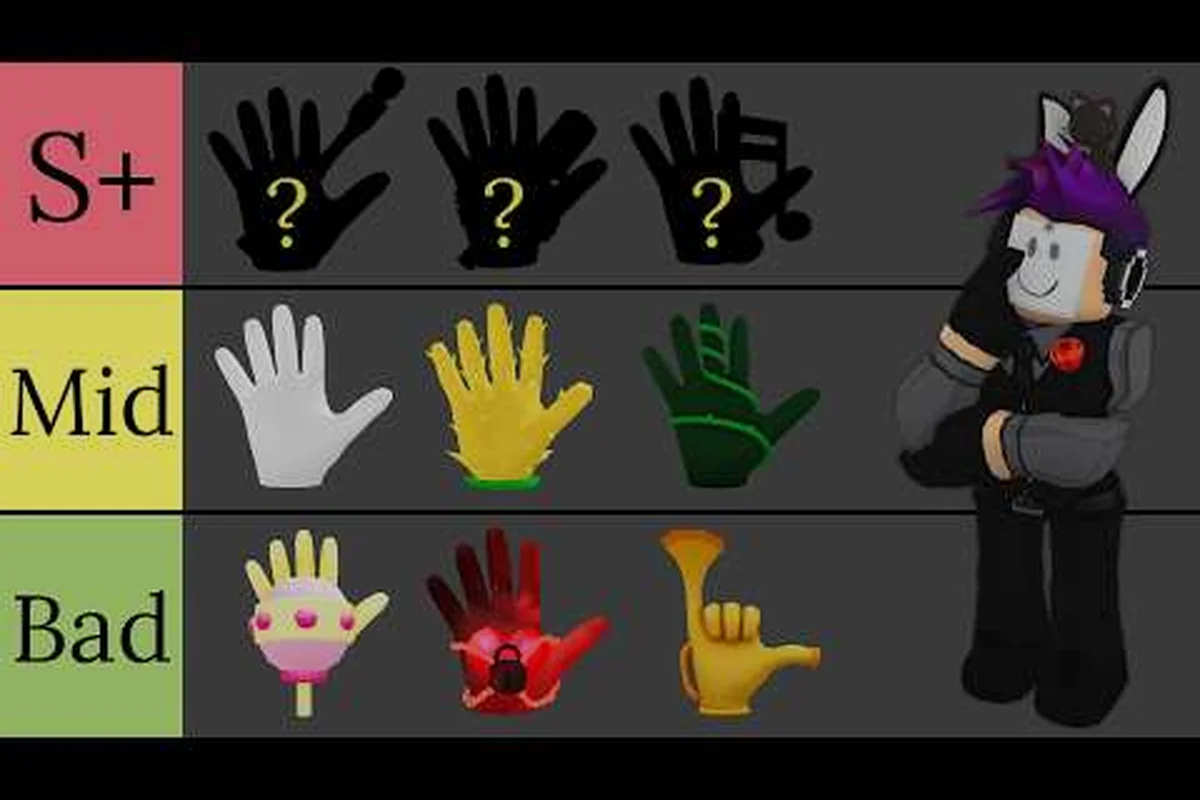
A reliable Slap Battles tier list matters because glove value depends on more than raw slap power. This ranking organizes 324 gloves by strength, speed, utility, and competitive potential, highlighting the best gloves for both early progression and high-level play. Damage output determines how quickly a target is eliminated, while speed, ability effects, and utility determine whether a glove can survive counterplay and hold its own in the current meta.
Slap Battles Tier List Methodology and Tier Criteria
The Slap Battles tier list groups gloves by practical performance rather than rarity alone. A rare glove can fall below common equipment when its attack is slow, its ability has poor consistency, or its defensive value does not compensate for weaker damage. The 324-glove pool is assessed through repeatable combat scenarios, with individual results treated as community-informed estimates that may vary by platform, mastery level, and patch.
How Each Tier Was Evaluated
A glove earns a stronger placement when it performs reliably across several situations instead of excelling in only one narrow situation. The evaluation gives the greatest weight to repeatable damage, because an ability that lands consistently usually produces more value across a full match than a dramatic but easily interrupted effect.
| Evaluation factor | What it measures | Why it matters in matches |
|---|---|---|
| Slap damage | Damage under a normal attack cycle | Supports the fastest route to a knockout |
| Ability impact | Burst, control, utility, or survivability | Creates decisive openings when timed well |
| Speed | Delay before the glove attacks or activates | Rewards better spacing and faster reactions |
| Consistency | Performance across repeated encounters | Separates dependable options from situational picks |
| Mastery ceiling | Potential after upgrades and practice | Rewards dedicated players with stronger late-game tools |
Raw power receives a place in the ranking, but it cannot carry a glove by itself. A blow that connects for more damage is less valuable when the wind-up is easy to read, while a modest hit with useful movement or defense can be stronger in practice.
Understanding the Tier Labels
| Tier | General meaning | Recommended use |
|---|---|---|
| S Tier | Exceptional, match-shaping performance | High-level play and immediate competitive use |
| A Tier | Excellent strengths with minor limitations | Strong choices for most experienced players |
| B Tier | Competitive and dependable | Flexible picks for improving players |
| C Tier | Situational or inconsistent value | Rotations, challenges, and collection |
| D Tier | Significant weaknesses | Learning tools or low-priority upgrades |
The tiers compare a glove against the current 324-glove field rather than assigning permanent labels to individual items. Because balance can change, community reports should be treated as as of October 2026, with in-game testing taking priority when a recent update alters cooldown, speed, or ability behavior.
S Tier and A Tier Gloves in the Slap Battles Tier List
The highest portion of the Slap Battles tier list contains gloves that combine at least one major advantage with enough coverage to remain useful. A glove may lead through explosive damage, exceptional speed, durable defense, or an ability that controls space. No single style wins every encounter, which makes role and timing central to the ranking.
Top 10 Gloves That Define the Current Meta
The table below presents a practical Slap Battles top 10 gloves list. Because the supplied data does not include verified names and statistics for all 324 gloves, these entries are described by performance profile rather than invented item labels. This preserves a clear ranking framework while avoiding false precision.
| Rank | Glove profile | Primary strength | Secondary strength | Best fit |
|---|---|---|---|---|
| 1 | Elite burst glove | Maximum burst damage | Strong opening pressure | Aggressive knockout specialist |
| 2 | Fastest slap glove | Very short attack delay | Excellent combo consistency | Close-range attacker |
| 3 | Control-focused glove | Stuns, knockback, or interrupts | Creates space | Defensive pressure player |
| 4 | Tank glove | High effective health | Durable standoffs | Shield-first builds |
| 5 | Balanced mastery glove | Strong all-around numbers | Flexible abilities | Generalists and tournaments |
| 6 | Mobility glove | Strong movement utility | Better repositioning | Evasive counterplay |
| 7 | Cooldown specialist | Rapid ability recovery | Repeatable pressure | Aggressive skill spam |
| 8 | Reach glove | Superior attack range | Easier first contact | Ranged harassment |
| 9 | Anti-air glove | Reliable punish potential | Counters jump attacks | Defensive specialists |
| 10 | Economical fighter | Strong damage-to-cost ratio | Efficient progression | Budget-conscious players |
These profiles represent the current meta gloves most likely to shape ranked matches. The best glove in slap battles changes with the situation, because a slow knockout tool that survives repeated contact can outperform a faster glove against passive opponents.
Why One “Strongest Glove” Label Can Mislead Players
The Slap Battles strongest glove depends on what the player values. Burst damage rewards aggressive spacing, speed supports continuous combinations, and defensive tools can make otherwise disadvantaged fights winnable. A practical ranking therefore compares gloves by role before naming an overall favorite.
| Player objective | Highest-priority attributes | Better tier fit |
|---|---|---|
| Win quickly | Burst damage, reach, first-hit value | S to A Tier |
| Survive longer | Defense, recovery, disruption | S to A Tier |
| Learn mechanics | Low risk, clear function | A to B Tier |
| Play tournaments | Consistency, counter coverage | S to A Tier |
| Complete challenges | Special effects and rarity | Depends on objective |
Rather than chasing a single universal answer, the better approach is to identify the stat your build cannot afford to lose. That principle is especially useful when comparing every glove ranked in this collection against the current meta.
B Tier and C Tier Gloves: Competitive but Situational
Mid-tier equipment can still be excellent, especially when its strengths align with a particular matchup. The middle of the Slap Battles glove ranking rewards players who understand activation timing, spacing, and cooldown planning. A dependable B Tier glove may also be easier to use than a volatile S Tier option.
B Tier Picks for Flexible Builds
| Build need | B Tier glove type | Why players keep it |
|---|---|---|
| General combat | Balanced stat package | Avoids severe weaknesses |
| Combo gameplay | Short cooldown | Allows repeated ability strings |
| Pressure play | Knockback or small area effect | Creates useful spacing |
| Survival | Moderate defense | Improves the odds of landing another slap |
| Training | Clear attack timing | Supports deliberate practice |
B Tier gloves are valuable when a player wants one dependable option without maintaining several loadouts. They can also bridge the gap between early progression and top-tier equipment, making them sensible choices for players studying competitive glove viability and main choices.
C Tier Gloves and Their Narrow Strengths
C Tier gloves are not automatically worthless, especially when their activation, cooldown, or passive bonus creates a clear advantage over a broadly stronger glove. A slow-starting option may trade immediate pressure for a powerful single hit that can win a close-range exchange, while a narrow-bonus glove can become valuable when its target condition is met. Their weakness appears when the match becomes prolonged, the opponent recognizes the same opening repeatedly, or the glove’s limited defense allows repeated strafing and spacing to neutralize it.
| C Tier weakness | Best counterplay | Potential value |
|---|---|---|
| Slow startup | Strafe and punish after activation | Strong single hit |
| Long cooldown | Control spacing | Burst threat |
| Narrow bonus | Change targets or play styles | Objective specialist |
| Limited defense | Retreat and reset | Early-game fighter |
| Inconsistent utility | Follow up with normal attacks | Situational combo piece |
The lower tiers should be judged by their opportunity cost. If a glove occupies the same slot as a broadly stronger option, it needs a clear benefit before it deserves priority. A detailed look at budget-friendly and low-cost glove options can help identify useful picks without overstating their competitive ceiling.
Tier-List Picks by Battle Situation
A static ranking becomes much more useful when it is translated into matchup decisions. The same glove can dominate an aggressive exchange and lose to a patient opponent. This section of the Slap Battles tier list focuses on how to select equipment for specific scenarios, including tournaments, crowded arenas, and defensive play.
Best Choices for Aggressive Openings
Aggressive players should prioritize first-hit advantage, fast recovery, and enough burst to discourage a counterattack. A strong opening glove can make opponents reconsider their approach, but only if its activation timing preserves room for a backup plan. For example, a speed-focused glove can punish an opponent who takes an extra step to initiate, while an elite burst glove can threaten a one-hit KO when the target remains within range. If the first attack misses, immediately use the glove’s recovery window to reset spacing, cancel the opponent’s follow-up, or escape toward the arena edge rather than continuing into a longer combo.
| Opening priority | Recommended profile | Execution advice |
|---|---|---|
| Fastest first hit | Speed-focused glove | Attack before the opponent settles |
| Highest knockback | Control-focused glove | Create room after impact |
| One-hit threat | Elite burst glove | Test range before committing |
| Long combo access | Cooldown specialist | Cancel the opponent’s recovery |
Players who enjoy pressuring targets should test the top 10 gloves in private training before committing to one, since a strong rank does not guarantee the best first-hit timing in every match. Use the opening-priority table to compare speed-focused, control-focused, elite burst, and cooldown-specialist profiles against a target that alternates between close-range swings and evasive movement. Practice spacing, activation timing, and recovery because a glove that creates an early knockout window can still fail if its recovery leaves you exposed to the opponent’s follow-up.
Defensive Picks That Survive Pressure
A defensive glove does not need to win every exchange immediately. Its job is to prevent a clean knockout, create a response window, and punish an opponent who overcommits. That makes armor, recovery, knockback, and disruption more valuable than isolated damage.
| Defensive need | Useful glove trait | Winning pattern |
|---|---|---|
| Absorb damage | High effective health | Let the first attack land, then counter |
| Reset the fight | Recovery effect | Win space and re-enter later |
| Stop airborne attacks | Anti-air capability | Track jumps and punish landing |
| Break a combo | Interrupt or stun | Respond during the opponent’s recovery |
Defensive players should also check the dedicated best defensive glove analysis when comparing durability against actual usefulness. A high survival number loses value if the glove cannot threaten the opponent after it blocks an attack.
How to Choose the Best Gloves for Your Playstyle
Choosing the best gloves in slap battles begins with your normal role, not with a public leaderboard. A reliable method is to select a main glove, identify its strongest attribute, then use a second glove for the weakness it cannot solve. This creates coverage without requiring a player to master the entire 324-glove pool.
A Five-Step Selection Process
-
Define your role. Decide whether you want to win through rapid attacks, explosive knockouts, defense, or disruption.
-
Choose one essential attribute. Prioritize burst, speed, reach, durability, or cooldown based on the situations you encounter most.
-
Test in a controlled match. Measure activation speed, recovery time, and whether the attack behaves as expected after a miss.
-
Add a complementary backup. Pair a pressure glove with defense or a defensive glove with reach to reduce predictable weaknesses.
-
Review after updates. Because balance may vary by version, retest the glove whenever patch notes or player reports indicate a possible change.
| Decision point | Choose a stronger build when… |
|---|---|
| Damage | The opponent cannot be pressured before landing your attack |
| Speed | Your main damage window is too inconsistent |
| Defense | Combos repeatedly end before a counterattack |
| Ability | Normal attacks cannot create an opening |
| Simplicity | Complex timings lower your practical win rate |
This process helps identify the best glove in slap battles for your own matchups, even if it does not match the first name on a community list. A glove is “best” when its expected results remain strong after accounting for your aim, reaction time, and preferred distance.
Budget, Free Options, and Progression Choices
Affordable equipment can be surprisingly competitive when its function is clear. A lower-cost glove with dependable speed may be more useful to a developing player than an expensive option that demands perfect timing. Compare the full price, cooldown behavior, and practical hit rate rather than judging by ownership status.
Budget players can also use the current glove tier overview for 2026 to distinguish valuable upgrades from collection-only additions. Keep the best performer in your favorite role, but save a second option that covers the weakness most likely to decide your next match.
Meta Management, Matchup Strategy, and Ranking Updates
Even the strongest equipment cannot compensate for predictable behavior. The Slap Battles tier list changes as players discover efficient ability combinations, and a glove can move after a balance patch, a popular update, or a change in the surrounding roster. Good players review the tier without assuming that last month’s label is permanent.
Reading Meta Trends Without Chasing Every Update
Community reports are valuable for spotting trends, but they should be treated as leads rather than final proof. A newly popular glove may be genuinely stronger, or its owner may simply be using it in favorable lobbies. Compare performance notes with personal tests before replacing a stable main.
| Signal | Interpretation | Best response |
|---|---|---|
| Repeated high placement | Possible tier movement | Test the glove personally |
| Strong opening, weak recovery | Situational rather than dominant | Prepare a backup |
| Ability-dependent reports | Requires specific timing | Practice in isolation |
| Recent patch change | Ranking may be unstable | Wait for clearer data |
| One-player success | Anecdotal evidence | Do not rebuild around it |
Tournament play is a useful test because organized matches reward consistency, but it also emphasizes players who already understand the format. Players preparing for formal competition can compare these choices with glove recommendations for tournaments and PvP, where defensive coverage and repeatable openings matter especially.
Practical Matchup Planning
Matchup planning should focus on the opponent’s recovery rather than memorizing every glove. If an enemy is aggressive, a defensive or control glove can reward patience. If the enemy waits, speed and burst pressure reduce their comfort. If both players favor the same style, a different ability profile can break the repeated pattern.
| Opponent behavior | Counter tendency | Glove profile to test |
|---|---|---|
| Constant forward pressure | Defense and counterattack | Tank or anti-air |
| Patient zoning | Fast gap closing | Speed or mobility |
| Heavy one-shot setup | Disruption and distance | Reach or knockback |
| Close-range combos | Burst or cooldown pressure | Aggressive specialist |
| Defensive stalling | Control and penetration | Balanced damage with utility |
The most useful meta gloves are not always those with the highest skill ceiling. They are the options that fit your habits while still challenging the opponent’s habits. The 324-glove comparison should therefore serve as a decision map, not an instruction to discard every option outside S Tier.
What the Ranking Means for New and Experienced Players
New players benefit most from a small, dependable pool because they can learn timing instead of constantly changing equipment. Experienced players can use tier lists to identify efficient tools and preserve a backup for common matchups. In both cases, the practical value of a glove grows when its activation is understood.
Players should revisit the ranking after major updates, especially if community testing reports changes to damage, speed, or cooldown. The same community reports that identify an emerging meta pick can also expose an old “must-use” glove that no longer deserves its previous tier.
Summary of the 324-Glove Ranking
The Slap Battles tier list ultimately favors balanced strength, role clarity, and repeatable execution. The best gloves in slap battles excel at burst, speed, defense, control, or versatility, while the strongest glove depends on the matchup rather than a universal label. Use the tiers to shortlist equipment, practice its timing, and maintain complementary backups for the situations your main cannot control.
Frequently Asked Questions
What is the best glove in slap battles?
The best glove in slap battles depends on the matchup. Burst-focused options excel against stationary targets, speed gloves suit aggressive exchanges, and defensive or control gloves create openings against aggressive players. Choose the one whose main strength matches how you win fights, then practice its recovery timing.
Which gloves are the current Slap Battles meta picks?
The current Slap Battles meta gloves combine a clear advantage with reliable follow-up value. Burst, cooldown, control, mobility, and balanced mastery profiles occupy the highest competitive areas, but a top-tier pick should still suit the player using it. Community testing is useful for spotting candidates, while personal match results determine the best main.
Is a rare glove always stronger than a common one?
No. Rarity does not guarantee the strongest performance because speed, activation timing, damage, and ability usefulness determine practical value. A lower-rarity glove can outperform a premium option when it offers a needed advantage and remains reliable. Compare the complete stat package and role instead of relying on rarity alone.
How often does the 324-glove ranking change?
The ranking can change after balance updates, new content, or shifts in player behavior. Minor tier movement may appear sooner, while larger re-evaluations require more match data. Treat the list as a current snapshot, verify important choices in training, and recheck community reports after relevant patches.