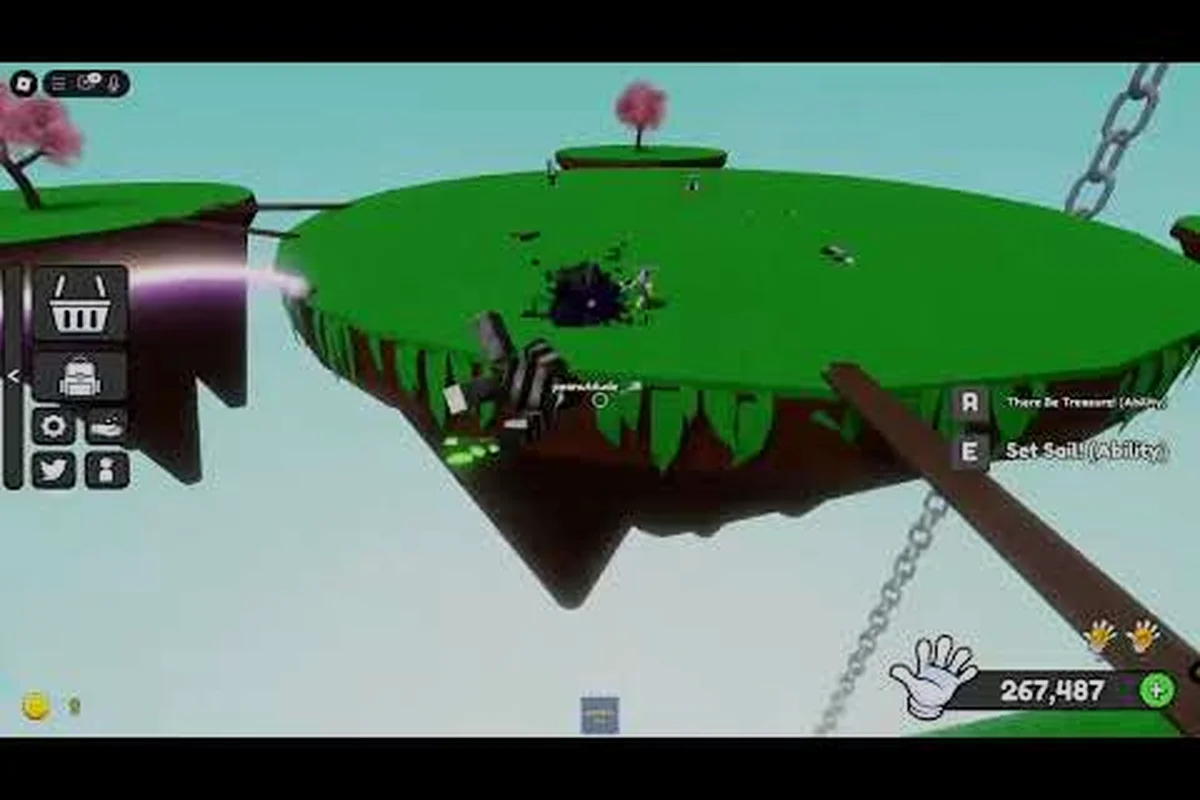
Slap Battles gameplay explained starts with a simple objective: earn slaps, unlock stronger gloves, and use knockback to push opponents toward the edge. The slaps you land also drive progression, making every match a test of timing, positioning, and risk management.
How Does Slap Battles Work?
The core loop combines combat, movement, and progression. Players enter a match, chase opponents, land slaps, and try to knock rivals out of the arena. Successful hits generate the slap currency needed to unlock gloves, while better gloves can improve damage, force, or other useful attributes.
That structure matters because Slap Battles is not a passive idle game. Matches reward active positioning, especially when an opponent is already near a boundary. A modest hit can finish a knockout, while a poorly timed attack can leave you exposed to a stronger response.
Match structure and objectives
A typical round follows three broad phases: approach, contest, and finish. During the approach, players spread out or close distance. During the contest, they exchange hits and use movement to control where each opponent stands. The finish phase happens when one player is pushed beyond the playable area.
| Match phase | Main objective | Useful behavior | Common mistake |
|---|---|---|---|
| Approach | Find an opponent | Move with space around the arena | Rushing into a group blindly |
| Contest | Land reliable hits | Watch the opponent's recovery timing | Swinging when the target is moving away |
| Finish | Secure a knockout | Attack near the arena edge | Continuing the fight after the opening appears |
The safest opening is often a measured one. Players who move directly toward the nearest opponent may commit to a long chase, giving other competitors time to intervene. A controlled approach preserves room to dodge and makes it easier to react when a rival changes direction.
A first-time player can also review the beginner guide to Slap Battles for a broader introduction before focusing on advanced positioning. The important idea is that offense and survival are connected: the spot you occupy determines which attack you can make and which counter you can avoid.
Winning by knockouts
A knockout normally comes from repeated force rather than a single perfect strike. You can damage an opponent's balance, alter their position, and then redirect them toward the boundary. This makes every hit useful even when it does not immediately remove the player.
Community reports indicate that players often become more dangerous when they stop chasing the finish. Instead, they use short slaps to push a target sideways, then swing around to send that target toward the nearest edge. This creates a cornering pattern that works even when a direct knockout is not immediately available.
The ragdoll physics and knockback mechanics provide more detail on why movement, mass, and attack timing influence the result. For now, remember the principle: the goal is not merely to touch an opponent, but to control the space between your glove and the arena boundary.
How Slaps Work in Slap Battles
Slap Battles slaps explained centers on more than a damage number. A slap applies force, interrupts movement, and changes where the target can go next. The same glove may feel decisive against a stationary player and much less reliable against a moving opponent.
This is why comparing attacks by raw power alone can be misleading. A heavy slap creates a larger opening, but it may be slower or place you within range of a counter. A faster slap is easier to connect, yet it might not create enough separation for a finishing hit.
Force, contact, and recovery
Three separate moments determine the outcome of an exchange. Contact establishes the initial hit, force changes the target's momentum, and recovery creates the opening for the next action. Understanding those stages prevents the common mistake of assuming that touching an enemy equals securing an advantage.
| Hit outcome | What usually happened | Tactical result | Best follow-up |
|---|---|---|---|
| Clean contact | The glove lands while the target is exposed | Target loses position control | Repeat pressure or redirect toward an edge |
| Late contact | The target moves away during the swing | Less force and less predictable push | Reset spacing instead of committing another attack |
| Counter contact | The target interrupts the swing | The attacker can lose balance or be pushed back | Recover safely and preserve mobility |
| Edge pressure | The target is already near the boundary | Even modest force may decide the round | Attack decisively but watch for a dodge |
The contact window is the period in which a slap can affect an opponent cleanly. After that window, the target may have enough momentum to evade the outcome. This makes movement prediction essential: aim where the opponent is going, not where the opponent was when your glove started moving.
A more detailed look at how slaps and their counters function can help with the practical timing side. In competitive terms, the best player is often not the one with the fastest glove; it is the one who repeatedly turns modest contact into a dangerous position.
Why a slap counter matters
A slap counter is useful because it changes the rhythm of a duel. Instead of always initiating, you can wait for an opponent to overcommit, land your glove during recovery, and gain control of the next movement phase. That reversal also drains the opponent's confidence because their planned follow-up may land on empty space.
Counters work best when they punish a predictable pattern. If a player always attacks after moving forward, retreat at the moment they commit and face their open side. If they keep using the same glove, vary your distance and timing rather than relying on a slower reaction. The mastery system in Slap Battles may add further counters or glove-specific options, so progression can change how a familiar exchange is handled.
The Slap Battles Economy Explained
The Slap Battles economy explained in this guide is progression-focused: slaps are earned through play and spent on access to better equipment. The purpose of the slap counter in planning your matches is therefore bigger than a visible scoreboard; it measures the resources you can use to reach stronger gloves and new abilities.
Because progression is attached to performance, players have a reason to keep engaging after landing a hit. You do not need to win every exchange to make progress. Consistent slaps, short matches, and successful finishes all contribute toward the next unlock, although exact payouts may vary by version and platform.
Earning and spending slaps
The safest approach is to set a target for each session rather than jumping immediately at the most expensive item. Early purchases should improve reliability: a glove with balanced power and speed can create more stable knockback than an extreme option that is difficult to time.
| Progression choice | Immediate benefit | Long-term value | Practical consideration |
|---|---|---|---|
| Affordable early glove | Adds a usable new option | Reduces the pressure to rely on one opener | Often the best first upgrade |
| Mid-tier glove | Improves a meaningful combat attribute | Supports more varied match strategies | Buy after testing several standard exchanges |
| Gloves or abilities that change timing | Opens alternative attack patterns | Makes repeated counters less predictable | Requires practice to use efficiently |
| Cosmetic purchase | Changes appearance only | No mechanical advantage | Best treated as a preference rather than progression |
The guide to earning slaps in Slap Battles can help you organize the early progression loop. A practical rule is to earn enough for the next meaningful upgrade before shopping repeatedly. That avoids spending resources on several minor changes when one glove could produce a clearer improvement in your hit rate.
Matching gloves to play style
Players often focus on the largest visible power number, but a strong glove is not automatically the strongest choice. Attack speed affects how often you can create contact, force affects knockback, and special attributes may change the risk or reach of an ability.
| Play style | Useful attribute priority | Main advantage | Main weakness |
|---|---|---|---|
| Aggressive pressure | Fast attack and reliable reach | Creates frequent openings | Can expose the player during recovery |
| Edge finisher | High knockback force | Turns small positioning advantages into knockouts | Wastes value when used far from the boundary |
| Counter fighter | Recovery speed and reaction-friendly timing | Punishes predictable swings | May struggle against varied pressure |
| Controlled defender | Mobility and balanced knockback | Maintains safer positioning | Requires more patience to finish fights |
A balanced progression route generally outperforms an all-or-nothing setup. Keep one dependable attack, save for a stronger finisher, and learn when not to swing. This allows you to transition from a new glove’s strength instead of forcing the same play pattern after every purchase.
The Slap Battles Knockback System
In Slap Battles, knockback is calculated from the slap’s force, the target’s current velocity, and the direction of contact. A slow-moving opponent struck with a direct slap can be pushed back in a predictable line, while an opponent already moving sideways may be redirected into a glancing hit or tumble. This makes timing a slap as important as landing it: striking just before a target’s movement changes angle can produce a different displacement, altering their recovery space and your next available slap counter.
Knockback is not just an animation attached to contact. It affects combat decisions because the target’s position determines your next option. A push toward the center gives the opponent room to recover; a push toward the edge reduces the number of directions in which they can escape.
Reading the direction of impact
Positioning changes the result of a slap. When you strike across an opponent’s path, you may redirect their movement. When you strike directly from behind, the force is more likely to push them away from you. The same glove can therefore create different results in different positions.
| Attacking angle | Likely tactical effect | Why it matters | Practical use |
|---|---|---|---|
| Direct rear contact | Pushes the target farther forward | Extends distance behind the target | Useful when their forward route leads toward an edge |
| Side contact | Redirects movement sideways | Changes the target's escape lane | Strong for positioning an opponent toward a boundary |
| Frontal contact | Pushes the target backward | Creates room for the attacker | Useful when you need space for another attack |
| Glancing contact | Produces less predictable displacement | Makes clean follow-ups harder | Avoid relying on it near the edge |
Edge displacement is the practical goal of the knockback system. Before attacking, identify which direction would move the opponent toward danger, then compare the available angles: rear contact can extend their forward route, while side contact can redirect them toward a boundary and frontal contact can create space for your next slap. If no direction offers a useful landing point, improve the angle instead of throwing force into open space, because displacement only matters when it changes the opponent’s position relative to the edge.
Managing your own momentum
Knockback applies to attackers as well. Chasing aggressively can carry you past the target, and swinging while traveling may reduce accuracy. A quick stop can look wasteful, but it preserves your ability to attack the opponent’s new position rather than the one they just left.
| Movement habit | Knockback risk | Better adjustment |
|---|---|---|
| Running straight past a target | Your hit pushes them away from you | Arc around the target before attacking |
| Swinging during a full sprint | Reduced control and slower recovery | Plant your feet, then release the attack |
| Standing after a successful hit | An opponent can counter from behind | Move with the force or create a second angle |
| Fighting beside the edge | Less room to dodge or reposition | Move inward before starting a long engagement |
The central lesson of the knockback system is that force is directional strategy. Winning a knockout often requires controlling where the opponent travels, while avoiding your own mistakes near the boundary. When the force is strong but the direction is poor, the opponent may simply recover and counter.
Turning Gameplay Knowledge Into Better Matches
Understanding the mechanics only matters if it changes your decisions. A useful practice routine focuses on one goal at a time, records what happened, and gradually adds complexity. Trying to master force, timing, slaps, and glove management simultaneously usually creates noise rather than improvement.
A practical match routine
Start each match by reading the arena and locating the most exposed player. Approach without committing your first attack, then use a normal slap to test distance and reaction. Save a stronger ability for a confirmed opening or an opponent near the boundary.
| Training phase | Focus | Measurement | Adjustment |
|---|---|---|---|
| First few matches | Basic slap range and dodge timing | Count clean openings missed | Use shorter, controlled approaches |
| Middle matches | Push direction and edge pressure | Note where knockouts begin | Attack from more useful angles |
| Later matches | Counter timing and glove rotation | Count repeated misses by type | Change timing after winning the opening |
| Unlock testing | New gloves or abilities | Compare consistency, not just peak force | Select the option with fewer wasted swings |
A useful opening hierarchy is contact, displacement, then finish. Try to secure clean contact before worrying about a dramatic knockout. Once the target is displaced, choose whether to continue pressure or redirect them. This sequence makes decision-making clearer during chaotic rounds.
Common mistakes and corrections
Many losses come from repeated habits rather than unfamiliar tools. Chasing a target after a miss, attacking with the strongest glove regardless of range, and standing near the boundary can all erase otherwise good progress. Each habit worsens your positioning: a failed chase gives the opponent control of the route, a maximum-range swing has slower recovery if the slap counter misses, and boundary pressure removes the space needed to dodge a knockback. A safer rhythm is to reset after each miss, use a controlled test attack to confirm reach, and preserve enough room for a counter before committing.
| Mistake | Why it hurts | Correction |
|---|---|---|
| Chasing the same opponent across the arena | They dictate the route and may lead you to a disadvantage | Reposition toward a shorter exit |
| Swinging at max range | Contact is less reliable and recovery is exposed | Use a controlled test attack |
| Activating an ability too early | The opening disappears before the effect lands | Wait for a predictable commitment |
| Ignoring knocked-back players | They can recover and attack from a new angle | Track their direction, not just their location |
| Buying only for peak damage | One tool may narrow your usable range | Favor consistency until you know your style |
Reviewing replays can reveal whether repeated misses began with the same approach—for example, a slap thrown from beyond reliable reach, a slap counter attempted before the opponent’s recovery finished, or a chase that surrendered open space. If the pattern points to spacing or timing, fix that step before changing gloves, because a stronger tool cannot repair a faulty opening. This preserves the cause-and-effect chain between positioning, slap counter timing, and the next successful hit.
Rare Mechanics and Match Situations
Once the basic loop is familiar, advanced play comes from creating unusual situations rather than repeating a fixed pattern. Experienced players can vary the spacing between slaps, bait a slap counter with a short-range feint, and then use knockback to change the distance before the next exchange. Arena geometry matters too: a corner or narrow lane can limit movement, making a missed timing window easier to punish, while open space gives opponents more room to escape. The goal is to make the next action hard to predict without abandoning the economy system; each feint should still preserve enough stamina or coins for the follow-up slap.
Feints and redirected pressure
A feint is any movement or wind-up that encourages a predictable response without committing to the hit. The goal is not to fool the opponent every time; it is to make them reveal their counter timing. After observing that timing, you can choose whether to continue the attack, sidestep, or leave the arena for a better angle.
| Situation | Player A | Player B | Best counterplay |
|---|---|---|---|
| A repeatedly slaps from the front | B expects a direct push | A steps aside at the last moment | Redirect the target laterally |
| B always follows missed swings | A creates space after contact | B takes a second swing | Retreat and counter the recovery |
| A uses a powerful ability at close range | B backs away before release | A must chase | Preserve stamina and punish the approach |
| Both players avoid contact | Arena space becomes the deciding factor | Circle toward a useful boundary | Force a reaction instead of waiting |
Rhythm change is a particularly valuable advanced habit. Alternate your distance, timing, and attack choice so opponents cannot settle into one response. The feint is only the setup; the actual benefit comes from what you do after the opponent reacts.
Multi-opponent positioning
With several players nearby, the strongest target is not always the correct one. Attacking a third party may cause them to collide with someone else, alter the group’s formation, or make another player commit to a counter. You can use that reaction while keeping your own escape route open.
A good rule is to avoid becoming the center of a group. Stand beside the action rather than in front of it, attack toward open space when possible, and never swing if the only available direction leads into two opponents. Position changes after every knockback are more valuable than one extra hit because they preserve future choices.
Ability management
Abilities should answer a specific match problem. A rapid movement option may help create space, a stronger strike may finish a weakened opponent, and a defensive effect can protect against a predictable counter. Activating an ability without a clear purpose usually wastes both its effect and the recovery period.
Before using an ability, ask three practical questions: Is the target vulnerable now? Will the effect create better positioning afterward? Can I still dodge if it misses? If the answer to the third question is no, the attempt may create greater risk than the estimated reward. A slower but safer opening is often the foundation of a consistent high-level style.
Frequently Asked Questions
What is the main objective in Slap Battles?
The main objective is to earn slaps through combat, use that currency to unlock gloves and abilities, and win matches by knocking opponents outside the playable area. Progress and victory are connected because useful slaps come from landing hits, while better equipment can make positioning and knockback easier to control.
Do slaps deal damage or only push opponents?
Slaps primarily apply force, but that force also creates a practical damage effect because it interrupts movement, changes the opponent's position, and opens opportunities for further attacks. A clean hit may not cause an immediate knockout, yet repeated displacement can leave a target unable to recover before reaching the edge.
How do I counter an opponent who keeps chasing me?
Avoid running in a straight line because a predictable retreat can pull you toward a dangerous area. Circle toward a shorter escape route, use the first contact to redirect the opponent, and preserve space for a counter. If the opponent repeatedly follows, change rhythm rather than continuing the same chase pattern.
Is a higher-power glove always the better purchase?
No. A higher-power glove is most useful when its timing, range, and force fit your play style. Balanced attributes can produce more reliable openings and cleaner knockback than an extreme option. Compare the glove with your normal engagement distance, then test whether it creates more successful finishes without increasing missed swings.
What should beginners focus on before buying more gloves?
Focus first on contact timing, movement control, and the direction of knockback. Those fundamentals determine whether any glove performs well. Once you can reliably push opponents toward useful positions, upgrade the glove that most directly supports your preferred aggressive, defensive, or counter-based style.